Weight Loss After 40: Why Getting Lighter Isn't the Same as Getting Fitter
Years ago I lost about 14kg in 24 weeks. On paper, that was a result.
I was noticeably lighter. Smaller waist. Lower BMI. Look at those numbers on their own and you'd say I was healthier.
I was also weak and unfit.
The programme I followed was medically designed, sensible for what it was built to do, and it did exactly that. Around 1,500 kcal a day, mostly walking, nothing you could honestly call strength training. I lost the weight it was supposed to help me lose. I don't regret that and I'm not knocking the programme, it worked, for the outcome it was intended to produce.
Losing weight was never supposed to be the whole job.
The programme worked. I was measuring the wrong outcome
By the end of those 24 weeks I was substantially lighter. Visually, the change was dramatic. But I hadn't built or protected any real strength, and my fitness hadn't improved either. I'd turned into a smaller unfit person, not a fitter one.
This is my experience, not a claim that a 1,500 kcal diet makes everyone weak, plenty of people do something similar and come out fine. What happened to me is what happens when a programme is built almost entirely around mass reduction, with nothing in it that gives your body a reason to hold onto muscle or get better at doing physical work.
Nobody explained that to me at the time, and most "lose weight after 40" advice fails to mention it. I burned through most of the standard diets before I became a coach, and what actually changed things wasn't another diet.
BMI and waist measurements matter. They're not fitness tests
BMI isn't nonsense. NICE's current guidance on overweight and obesity management recommends BMI and waist-to-height ratio as practical tools for identifying overweight, obesity and central adiposity, and for flagging the health risks that come with them. Things like type 2 diabetes, hypertension, cardiovascular disease. NICE flags that BMI should be read with caution in adults with high muscle mass and in people over 65. And that's a caveat, it's great at population level but not always that helpful at an individual level.
BMI and waist circumference tell you something meaningful, because keeping your waist under half your height is a really useful, evidence-based target.
Neither number tells you how much force you can produce, whether you can get off the floor without using your hands, how good your cardiovascular fitness is, how your balance holds up, or whether you can actually do what your life asks of your body. A smaller waist and a lower BMI say something real about risk, but they don't say anything about capability.
Health after 40 isn't one number
Tracking scale weight on its own means you're measuring a fraction of what's important. Body composition matters, fat mass and lean muscle tissue, not just total body weight. So does strength, cardiorespiratory fitness, mobility and balance, whether your nutrition is actually supporting training and recovery, and how much you move day to day outside structured exercise.
That's not just my opinion, the WHO's physical activity guidelines recommend 150–300 minutes of moderate aerobic activity a week, or the vigorous equivalent, plus muscle-strengthening activity for the major muscle groups on two or more days a week. They're recommended separately because they do different things for your health. In their recommendations the public health guidance doesn't treat physical health as counting steps or shrinking your overall body weight.
Weight loss isn't automatically fat loss
The number on the scale is made up of fat, muscle, other lean tissue and water, so while you're in a calorie deficit you want most of that weight loss to come from fat, not from the muscle. Because you'll need muscle for the rest of your life, especially as you age.
A 2025 systematic review and meta-analysis in BMJ Open Sport & Exercise Medicine pooled 25 randomised controlled trials in adults with overweight or obesity. Adding resistance training to dietary weight loss attenuated the loss of fat-free mass (moderate certainty), increased the loss of fat mass (high certainty) and improved strength (low certainty), compared with diet alone.
Adding resistance training didn't make people dramatically lighter. Across these trials, it changed the type of weight they lost. Specifically, less muscle lost, more fat lost, and more strength gained.
They lost weight better, not just faster.
Muscle isn't collateral damage, it's part of the outcome
When working with clients I track muscle retention for capability, not appearance. Muscle is so important because it keeps you mobile, helps regulate blood sugar, supports your joints, and gives you something in reserve when illness, injury or an unreasonably heavy suitcase turns up. None of that shows up on bathroom scales.
Strength training gives your body a reason to hold onto that muscle while you're in a calorie deficit. That's why strength work is non-negotiable during a fat-loss phase, not an optional extra for people who "enjoy the gym." I stress this so often because muscle loss after 50 isn't inevitable, most of it, with the right training, is reversible.
Protein plays a huge supporting role too. Higher protein intake during a calorie deficit is linked to better muscle retention in adults who are overweight or obese, particularly alongside resistance training, and the daily target changes with body weight and activity level. A deficit creates the conditions for weight loss, but protein and resistance training decide what kind of weight actually comes off.
Diet can make you lighter. It can't train your heart and lungs
A calorie deficit can make you lighter. It doesn't train your cardiovascular system on its own. Walking improves aerobic fitness when it's properly challenging, so it needs to be brisk, regular, progressively harder. Just adding light daily walking to a restrictive diet isn't a path to meaningful improvement in cardiorespiratory fitness, and for plenty of people on a diet like mine, it never happens. Being lighter can make movement feel easier. That's not the same as having trained your heart, lungs and working muscles to handle a bigger workload. I got lighter over those 24 weeks without getting fitter, and that gap is exactly what a diet-only approach leaves unaddressed. For a normal working week, strength and cardio need to be balanced properly, not just added in randomly.
Bone loss during weight loss
Resistance training doesn't simply "prevent bone loss" during weight loss. The evidence doesn't support that. A 2025 randomised trial in JAMA Network Open found that in older adults with obesity losing around 10% of their body weight over 12 months, neither a weighted vest nor progressive resistance training fully prevented bone loss at the hip. Earlier trials suggest resistance training can reduce that loss compared with aerobic exercise alone. Reducing bone loss isn't the same as stopping it entirely.
Resistance training gives muscle and bone a useful mechanical stimulus during weight loss, but it can't guarantee bone loss won't happen, particularly with substantial weight loss in older adults. If bone health is a specific worry for you, that's a conversation for your GP alongside your training plan.
What about very low calorie diets?
NICE defines a very low energy diet as under 800 kcal a day, and is specific that these belong within specialist weight-management services, for people with a clinically assessed need for rapid weight loss, such as before certain surgery, supervised, nutritionally complete, and typically capped at 12 weeks. They're not dangerous nonsense, and they're not reserved only for people at the most severe end of obesity either. They're a specialist clinical tool for particular circumstances, not the default approach for someone who wants to get leaner, stronger and fitter over the medium term, which is what I coach.
What successful weight loss after 40 should actually look like
Forget judging progress purely on scale weight going down. Is your waist circumference coming down? Is that loss mostly fat rather than muscle? Is your strength holding steady or improving? Are your cardiovascular fitness and everyday physical function holding up? Is your diet actually sustainable rather than something you're gritting your teeth through?
Not everything needs to improve at once. But that's a genuinely meaningful definition of success than "the number went down."
One of my clients, Jonathan, just turned 60. He works in financial services, mostly desk-based, and trains with me three times a week. He does two strength-focused sessions and a boxing session. We keep the loading controlled rather than chasing big numbers on deadlifts or back squats, because at 60, staying injury-free and consistent beats chasing personal bests every time. He's strong, with visible, defined muscle without being bulky, and he eats mostly whole, unprocessed food with the occasional treat, which is exactly what the PrimeFit approach is built around. Heading into retirement, he's fit, healthy and properly active. He goes on walking holidays with friends and makes a point of the fact he's leading the pack, not trailing at the back.
Instead of judging progress purely on scale weight, focus on these fundamental habits:
Run a sensible deficit rather than chasing the fastest possible result. Eat enough protein to support muscle retention. Train with resistance consistently to give your body a reason to keep lean tissue. Include cardiovascular conditioning to build actual heart and lung capacity. Keep your everyday activity high outside structured exercise. Finally, track metrics beyond the scale, including your strength, waist measurement, and daily energy.
Individual circumstances, medical conditions, and the severity of any excess weight all change what's appropriate, so getting a proper assessment beats copying a generic plan from a magazine every time.
I don't regret losing that 14kg. I regret thinking weight loss itself was the destination. The actual objective was never to become as light as possible. It's to get leaner while staying strong, fit and capable, and that takes more than a calorie deficit and a decent pair of walking shoes.
So, if you're weighing up how to approach fat loss without repeating what I went through, that's exactly what an initial consultation at PrimeFit is for. I coach adults over 40 at Lightwater Leisure Centre, building strength, fitness and sustainable nutrition around two or three sessions a week, realistically what most busy professionals can hold down.
You can book a diagnostic consultation through edefitness.com, or email me directly at [email protected].
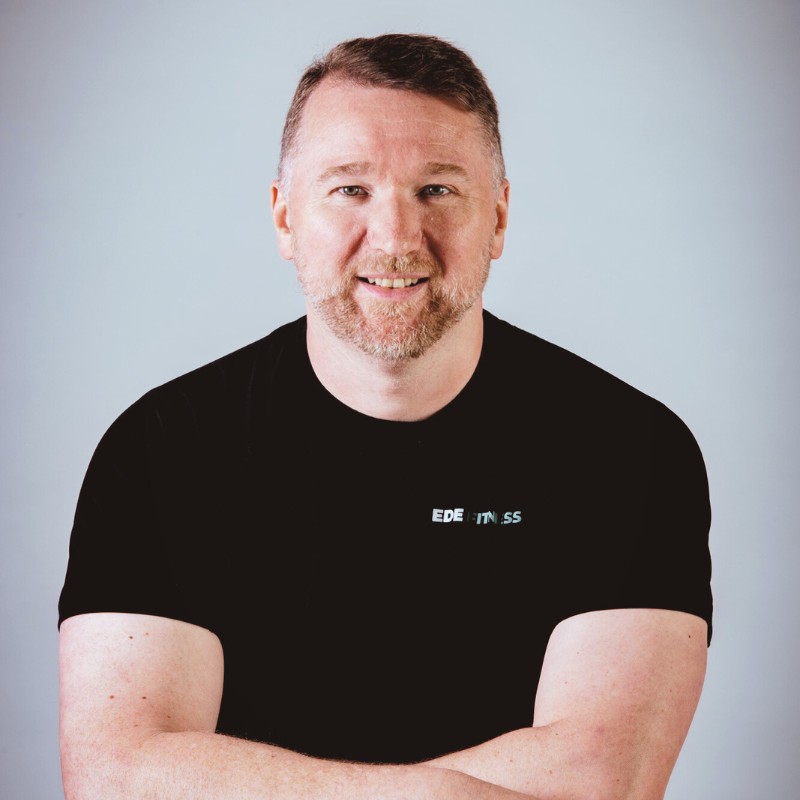
Rob Ede is a Level 4 nutrition coach and personal trainer running PrimeFit at Lightwater Leisure Centre.
Related reading
How Much Protein Do You Need After 40? Men and Women Compared — practical daily protein targets and why they matter more during a deficit.
Why You're Getting Weaker After 50, and Why It's Not Inevitable — the fuller picture on age-related muscle loss and why it's largely reversible.
How Much Exercise Do You Actually Need After 50? — a realistic weekly balance of strength and cardio for a busy schedule.
My Health Journey: Why I Became a Personal Trainer — the honest story behind the dieting years mentioned in this article.
References (for the curious)
Medical disclaimer: This article is for general information and education only and is not a substitute for personalised medical advice, diagnosis or treatment. I am a qualified personal trainer and nutrition coach, not a doctor. Always consult an appropriate healthcare professional before making significant changes to your exercise, nutrition or medication, particularly if you have a medical condition, are pregnant, or take prescription medication.
Copyright © 2026 Rob Ede. You may quote brief excerpts from this article provided you include appropriate attribution and a link to the original. Please do not reproduce or republish the article in full without written permission.