7 Ways a Personal Trainer Can Help You Get Stronger and Fitter During Menopause
Menopause changes things. Your shape shifts even when the scales don't. Sleep goes out of the window. Energy is fine on Tuesday and gone by Thursday. Your knees or hands ache in ways they never used to. And somewhere in all of that, plenty of women quietly stop exercising, or keep doing the same classes with less and less to show for it.
Here's what the evidence actually says: women keep building strength and improving body composition during and after menopause. A 2026 meta-analysis of more than 4,000 women found strength training worked just as well after menopause as before it. The body still responds. What changes is how much it rewards getting the approach right.
That's where coaching earns its keep. Not because you need someone shouting at you, but because the details matter more now: what you lift, how you progress it, what you eat, and how you adjust on the weeks when everything feels harder. I've set out the science in more depth in Menopause, Muscle and Metabolism: Why Strength Training and Nutrition Matter After 40. This piece is the practical side: seven ways a good personal trainer helps, and what that looks like with me at Lightwater Leisure Centre.
1. Stop guessing what exercise you should be doing
Most women I meet aren't short of effort. They're short of a plan. A bit of walking, a Pilates class, some light weights at home, maybe a HIIT video when there's time. None of it is wrong, but none of it is building anything in particular.
Coaching starts with an honest look at where you are now: your strength, how you move, your training history, any injuries or health conditions, and what you actually want to be able to do. From there you get a starting point that fits you, not a workout someone else designed for a 28-year-old.
Then it progresses. Weights go up, exercises get more demanding, and you can see it happening in your training log. That steady, visible progress is also what builds confidence in the gym. A common worry women bring in is that they'll look like they don't know what they're doing. Within a few weeks, that worry usually goes, because they do know what they're doing.
2. Build muscle without spending your life in the gym
Muscle is the tissue that keeps you capable. It gets you off the floor, carries the shopping, protects your joints, and helps your body handle the glucose from your meals. Lean mass tends to fall through the menopause transition, so giving it a reason to stay matters more now than at any point before.
The good news is that this doesn't take hours. Two or three well-designed resistance sessions a week, built around the big movement patterns (a squat, a hinge, a push, a pull, a carry), covers the essentials. NICE's menopause guideline specifically tells clinicians to explain the importance of maintaining muscle mass and strength through physical activity. This is how you do it.
The skill is in the detail: enough load to count, progressed sensibly, with enough recovery between sessions for your body to adapt. That's the bit most people get wrong on their own, either by never lifting heavy enough to matter or by doing too much and burning out. If you want the bigger picture on why strength fades with age and why it's reversible, read Why You're Getting Weaker After 50, and Why It's Not Inevitable.
3. Manage changes in body composition without crash dieting
This is the one that frustrates women most. You're eating the same, doing the same, and your clothes fit differently anyway.
There's a reason. The long-running SWAN study found that around menopause, the rate of fat gain roughly doubles and lean mass starts to fall, while total weight carries on at much the same pace as before. The scales barely move. What you're made of does.
The instinct is to eat less and do more cardio. That's usually the fastest route to losing muscle and feeling worse. A good coach changes the goal from "lighter" to "leaner and stronger": a moderate approach to food, plenty of protein, and strength training that tells your body to hold onto muscle while fat comes off.
It also means realistic expectations. Body composition changes slowly, and the scales are a poor judge of it. I track strength, waist measurement, energy and how your clothes fit alongside body weight, so you can see progress the scales would miss.
4. Make nutrition work for your changing needs
Menopause doesn't need a special diet, and you don't need a cupboard full of supplements. What it needs is the basics done properly.
The pattern I recommend to the women I coach is Mediterranean-style eating: plenty of vegetables, fruit, beans, lentils and wholegrains, olive oil as the main fat, fish a couple of times a week, plus nuts, yoghurt, eggs and poultry. The European Menopause and Andropause Society links it with better heart, bone and metabolic health, and it's a way of eating most people can actually stick to.
On top of that, I usually focus on four things:
Protein: around 1.0 to 1.2g per kilogram of body weight a day for most women over 40, more if you're training hard or losing fat, spread across breakfast, lunch and dinner. The detail is in How Much Protein Do You Need After 40? Men and Women Compared.
Calcium and vitamin D: for bone health, with the NHS advising a 10 microgram vitamin D supplement for everyone in the UK from October to early March.
Fibre: around 30g a day, which most people fall well short of.
Enough energy: under-eating while training is one of the most common mistakes I see, and it costs you muscle.
As a Level 4 nutrition coach, I also work around medical history. For example, women who've had breast cancer treatment, or who take certain medications, need to be careful with high-dose soya and phytoestrogen supplements and some herbal remedies. That's the difference between personalised coaching and a generic "menopause meal plan".
5. Adapt training around joint pain, fatigue and poor sleep
Joint and muscle aches, broken sleep and low energy are some of the most common reasons women give up exercise during menopause. They're also exactly why a coach is useful.
On a bad week, the plan changes rather than disappearing. I'll swap an exercise that aggravates a sore knee, cut the volume after a poor night, or move the heavy work to a day when you've got more in the tank. Turning up and doing 60% keeps the habit and the progress going. Skipping a fortnight is how a bad patch becomes three lost months.
Part of good coaching is knowing what isn't a training problem. If joint pain is persistent, getting worse or stopping you doing normal things, it needs proper assessment. I work alongside Physica Health, a Masters-qualified physiotherapy clinic in Bagshot, and will refer you when hands-on assessment makes more sense than another week of working around it. If symptoms like hot flushes, mood changes or sleep problems are affecting your life, that's a conversation for your GP or a menopause specialist, and I'll tell you so.
What matters is consistency, not perfection. A slightly imperfect plan you keep doing for a year beats a perfect one you abandon in March.
6. Get support beyond your gym sessions
Most of your week happens outside the gym, so most of the coaching does too. That's how my PrimeFit hybrid coaching works:
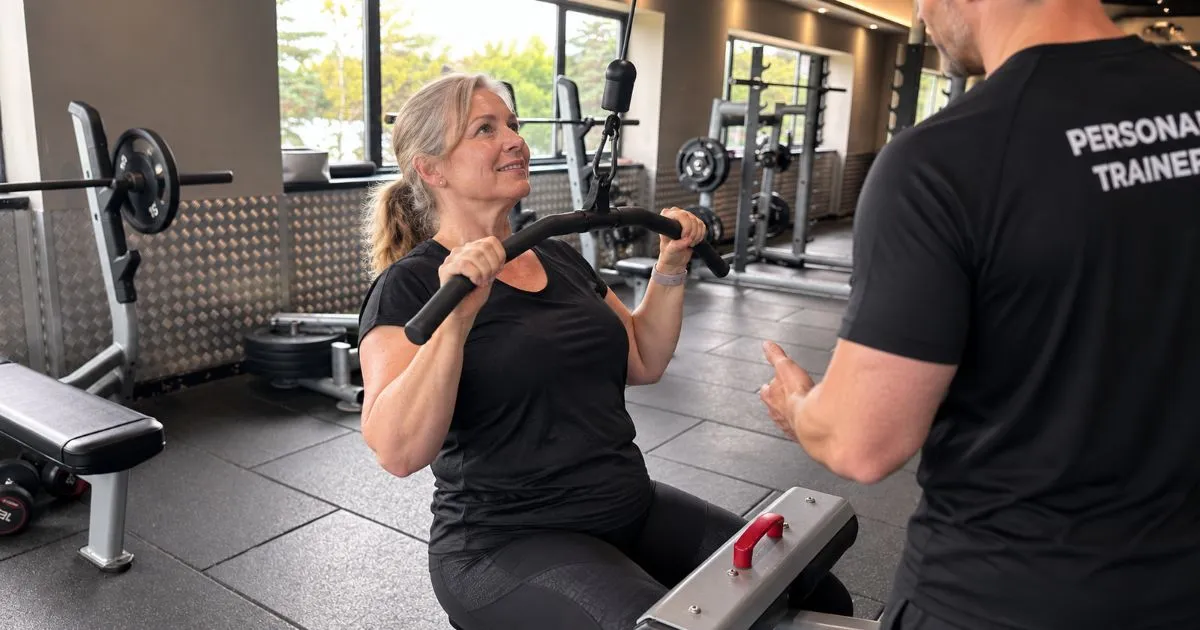
In-person sessions at Lightwater Leisure Centre, where I can watch your technique, coach you under load and adjust the plan on the spot.
An individual training programme for the rest of the week, built around your schedule and your energy, not a template.
The Everfit client app, where you can see your programme and log your workouts, and where I comment on how things are going throughout the week.
Nutrition coaching and food tracking, focused on a few habits that make the biggest difference rather than a rigid meal plan.
A formal weekly check-in, so we review the week properly and problems get spotted early, not after a month of drifting.
Progress monitoring across strength, body measurements and consistency, so you can see what's working.
In practice, that means you're never guessing between sessions, and nothing slips for long. If a week goes sideways, I'll see it in your log, and we'll adjust before it turns into a lost month. If you want to know more about how this works, I've written about it in Hybrid Coaching: The Best of Personal Training and Online Coaching.
7. Build strength and confidence for the years ahead
Training through menopause isn't really about menopause. It's about the next 30 years.
Strength is what lets you keep doing what you enjoy: the long walks, cycling, a round of golf, tennis, running, getting down on the floor with the grandchildren and back up again without thinking about it. Bone loss speeds up after menopause, and strength training gives bone the load it needs to stay strong. In the LIFTMOR trial, closely supervised postmenopausal women with low bone mass improved bone density and physical function through heavy, progressive training, with no injuries reported. That's the point of supervision: it lets you train in a way that works without taking silly risks.
And then there's confidence. Lifting something in week 12 that you couldn't lift in week one changes how you see yourself. It's measurable, it's yours, and it carries well beyond the gym.
What does menopause personal training look like at Ede Fitness?
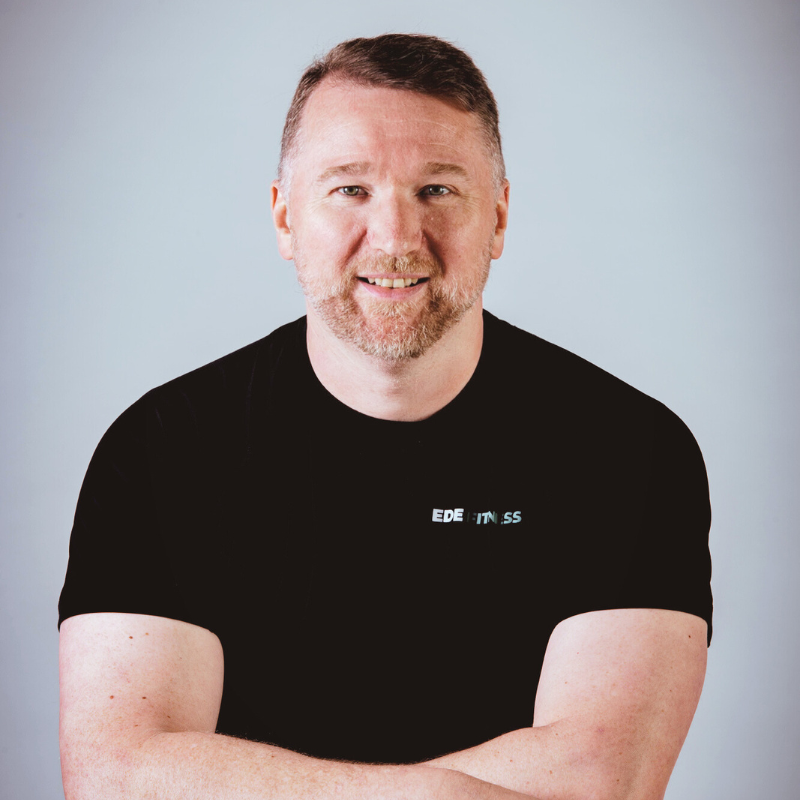
I'm Rob Ede, a Level 3 personal trainer, Level 4 strength and conditioning coach and Level 4 nutrition coach, based at Lightwater Leisure Centre. I work with adults over 40, and a lot of the women I coach are somewhere in perimenopause, menopause or beyond.
Here's how it works:
Free initial consultation. We sit down and talk through your goals, medical history, training experience and what's been getting in the way. No hard sell.
A plan built for you. Training and nutrition support matched to where you're starting, what you want and anything we need to work around.
Regular progress reviews. We look at the numbers, see what's working and adjust.
Ongoing support through PrimeFit hybrid coaching, in the gym and between sessions.
Coaching memberships start from £252 per month.
I work with clients from Lightwater, Bagshot, Windlesham, Camberley, Chobham, Bisley and the surrounding Surrey Heath villages.
Ready to feel stronger and more confident?
Menopause changes the conditions, not the rules. Your muscles still respond to being challenged, your bones still respond to load, and good food still does its job. The difference is that getting the details right now pays off for decades.
If you'd like to talk it through, book a free, no-obligation consultation at Lightwater Leisure Centre, or email me directly at [email protected].
Rob Ede is a health-first personal trainer and Level 4 nutrition coach at Lightwater Leisure Centre, working with adults over 40 across Lightwater, Bagshot, Windlesham and the wider Surrey Heath area.
Related reading
Menopause, Muscle and Metabolism: Why Strength Training and Nutrition Matter After 40: the evidence behind everything in this article.
How Much Protein Do You Need After 40? Men and Women Compared: practical daily targets and what they look like on a plate.
References (for the curious)