Why You're Losing Your Balance After 50 (And How to Improve It)
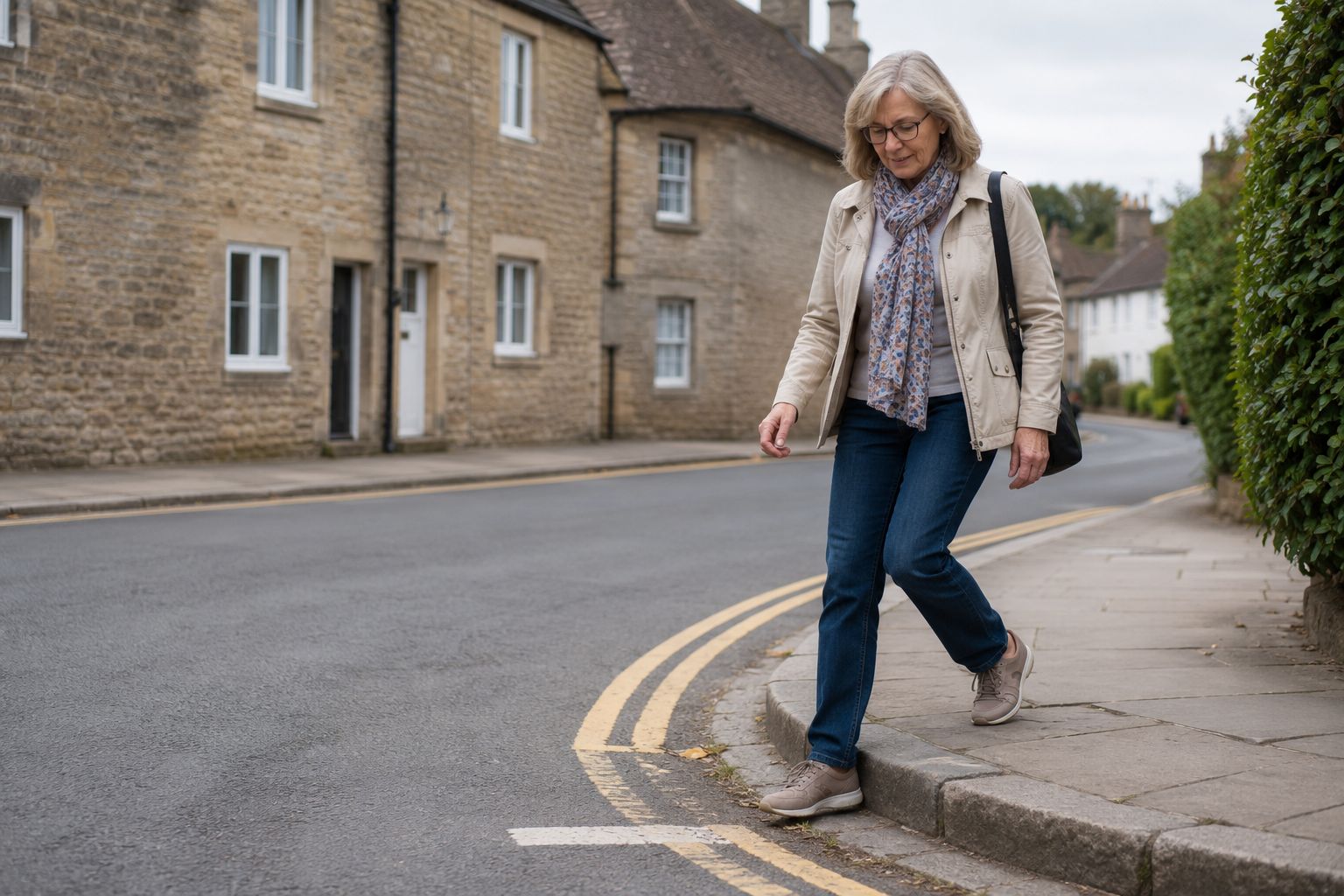
You stand up too fast from a low chair and the room tips, just for a second. You get out of the car after the drive back from London and your ankle doesn't quite know where the kerb is. You catch the edge of the rug in the dark and your arms shoot out before your brain's even registered what happened.
Most people laugh it off and move on. A your inner voice files it away as evidence. Evidence that the countdown's started. That this is what "getting old" actually feels like, and there's nothing to do but watch it get worse.
That's the wrong read entirely, and it's worth being precise about why, because the stakes are real: one in three women and one in five men over 50 will sustain a fracture linked to compromised bone health, and a fall is very often how that happens. But balance isn't a countdown. It's a skill, built from a system that responds to how you use it, and it degrades fastest in exactly the group who assume it's not their problem yet: fit, active, still-working fifty-somethings who haven't fallen and don't think of themselves as "at risk."
What's actually happening isn't wear and tear
Staying upright is a coordination job, not a structural one. Your brain constantly blends three data feeds: your vestibular system (the inner ear, tracking head position and movement), your somatosensory system (pressure and position sense from your feet, ankles and joints), and your vision. When all three agree, you don't notice any of this working. When one feed weakens or the three stop agreeing quickly enough, you get the wobble.
That's the real story behind age-related instability. It's rarely one part failing outright. It's the integration slowing down, the calibration between brain and feet getting a little less precise, often compounded by things that have nothing to do with your joints: a medication side effect, a long stretch of sitting, a bad night's sleep. Think of it less as ageing hardware and more as software that hasn't been patched. The good news with software is that it responds to use.

Balance is a professional asset, not an "elderly" concern
There's a reason this gets dismissed by people in their fifties: it sounds like something for a care home, not a boardroom. That framing is doing you no favours.
Physical stability is the quiet foundation underneath everything you'd actually call capability. The confidence to move fast through a demanding day, to travel without a second thought, to get down on the floor with a grandchild and back up again without a production number out of it, all of it rests on a nervous system that trusts its own footing. Undermine that foundation slowly enough and you don't notice the shift until it's already cost you options.
It also compounds with things you'll recognise from a stressful working life. Prolonged sitting blunts the somatosensory feedback from your feet and ankles simply through disuse. Chronic stress and fragmented sleep dull reaction time and the speed at which your three systems recalibrate. And a surprising number of professionals in their 40s and 50s are on medications, beta-blockers, antidepressants, diuretics, that independently increase dizziness or drops in blood pressure on standing. None of that shows up on a bathroom scale. All of it shows up the next time you stand up too fast.
"I'm 52, not 82. This isn't a me problem"
Fair objection, and worth discussing honestly rather than talking around it.
You're right that you're not the person NICE guidance is picturing when it discusses fall prevention for the frail elderly. But the guidance itself, updated in April 2025 (NG249), explicitly widens its scope to people aged 50 and over at higher risk, precisely because the deconditioning that eventually shows up as a fall in your 70s starts decades earlier, unnoticed, in people who feel fine. The wobble getting out of the car isn't nothing. It's data. Early data, from a system that's already telling you something, long before it would ever get flagged in a GP's office.
There's also a documented psychological trap here worth naming: people who expect to decline are measurably less likely to stay active, which then makes the decline real. Believing "this is just what fifty feels like" is itself part of the mechanism. Deciding it isn't inevitable is the first intervention, before you've done a single exercise.
The myths worth clearing up
"Once balance starts going, that's it." Wrong. It responds to progressive coordination and power training the same way muscle responds to load, at any age this evidence has been tested.
"I walk regularly, so I'm covered." Walking is genuinely valuable. Just 75 minutes of brisk walking a week is linked to a 1.8-year gain in life expectancy in a pooled analysis of over 650,000 people. But walking is a straight line at a fixed pace. It doesn't challenge the complex, multi-directional coordination that actually protects you when the floor does something unexpected. That needs a different, more deliberate stimulus.
"A quick 'falls risk' questionnaire would tell me if I need to worry." NICE explicitly recommends against relying on standard risk-prediction tools. The evidence behind them is weak, they just sort people into vague categories without pointing to what to actually do. A proper assessment of how you move beats a tick-box score.
What actually works
Strip out the noise and the evidence-backed hierarchy is short. Tailored, progressive training that builds strength, power and coordination together, not a gentle seated class that never gets harder, sits at the top. A medication review, if you're on anything that affects blood pressure or alertness, is next. Simple environmental fixes, better lighting, clearing trip hazards, come cheap and matter more than people expect.
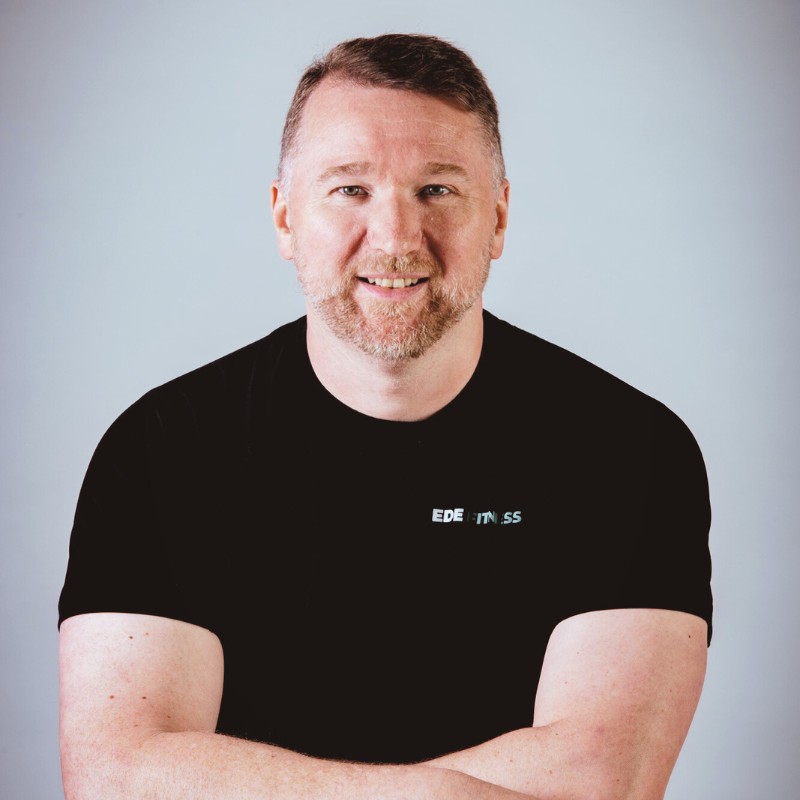
This is why I have a long-form health screening questionnaire with every new client, one that asks specifically what medications they're currently taking. It's not a formality. It's an essential part of the pre-screening assessment, because you can't build the right training programme without knowing what else might be pulling on someone's balance.
In practice, that means training that keeps asking a bit more of your coordination as you improve: single-leg work, controlled directional changes, load carried unevenly, the rate at which you can produce force, not just how much. Picture your feet and ankles as the casters on an office chair. However strong the frame is, a wobbly caster still makes the whole seat unstable. Fix the base, and everything sitting on top of it, including how capable you feel walking into a demanding week, gets steadier.
If you've noticed genuine dizziness on standing, or the wobbles are frequent rather than occasional, that's worth a proper look from a physio before you load anything new. I work alongside Physica Health in Bagshot for exactly that kind of assessment, so training and any underlying issue get addressed together rather than one masking the other.
For most people reading this, though, the fix isn't clinical. It's structured, progressive training, done consistently, the same lever that works for strength and everything else we've covered on this site. Two or three sessions a week, built around real coordination and power work rather than the polite version, is enough to shift this measurably. That's the whole basis of how I run PrimeFit at edefitness.com, working with professionals across Lightwater, Bagshot, West End, Windlesham and the wider Surrey Heath area who'd rather fix the foundation now than manage the consequences later.
If any of this sounds familiar, book a diagnostic consultation at Lightwater Leisure Centre and we'll look at how you actually move, not just how you feel about it. You can reach me through edefitness.com or directly at [email protected].
Related reading
How to Lower the Odds of a Replacement — and Come Through One Faster If You Need It
Is a Personal Trainer Worth It After 50? Here's What You're Really Paying For
References (for the curious)
NICE Guideline NG249. Falls: assessment and prevention in older people and in people 50 and over at higher risk. Published 29 April 2025. nice.org.uk/guidance/ng249
International Osteoporosis Foundation. Lifetime fracture risk statistics for men and women over 50.
Zaninotto P, et al. Association between positive attitudes towards ageing and physical activity in older adults (expectation-effect research summarised in Medical News Today, Medical myths about aging: Is deterioration inevitable?, updated August 2025).
Zheng C, et al. Leisure Time Physical Activity and Mortality: A Large Pooled Cohort Analysis. PLOS Medicine, 2012. journals.plos.org