Strength Training and Type 2 Diabetes: Why Muscle Matters as Much as the Scales
Muscle is where most of the sugar from a meal ends up. When insulin is doing its job, skeletal muscle clears the large majority of glucose from your blood, roughly 80% or more by most estimates. That makes it the biggest glucose store you've got, and it's why strength training belongs in any serious plan for preventing or managing type 2 diabetes.
Randomised trials show resistance training lowers HbA1c in people with type 2 diabetes. The latest joint consensus from the American Diabetes Association and the European Association for the Study of Diabetes, published this month, now names strength work as a fundamental part of care.
Weight is still important, but it just isn't the whole picture.
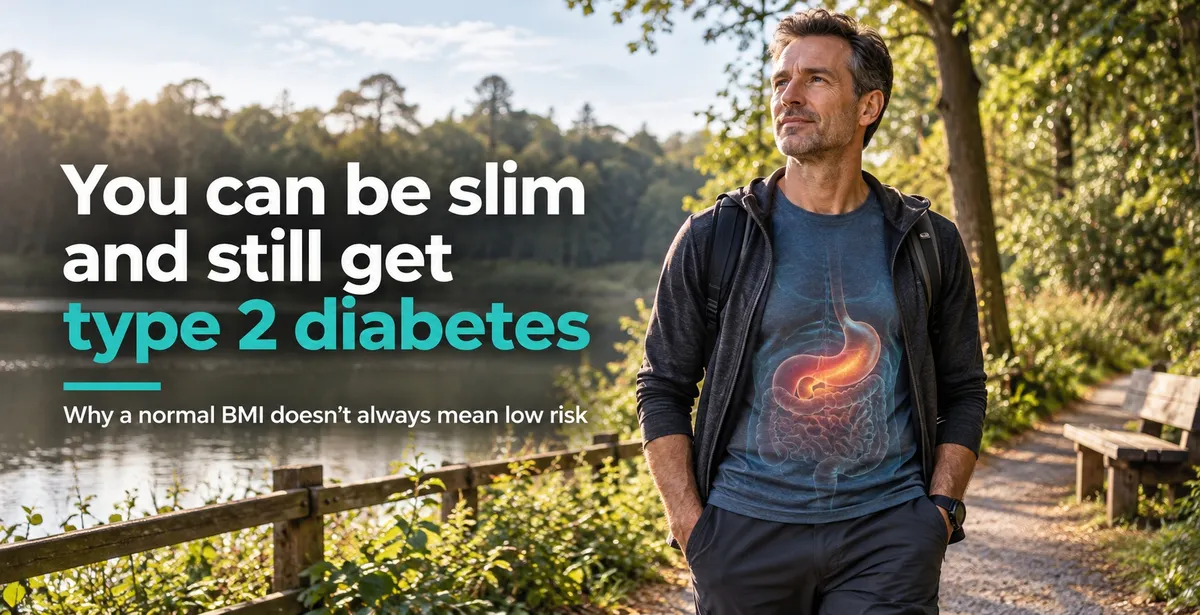
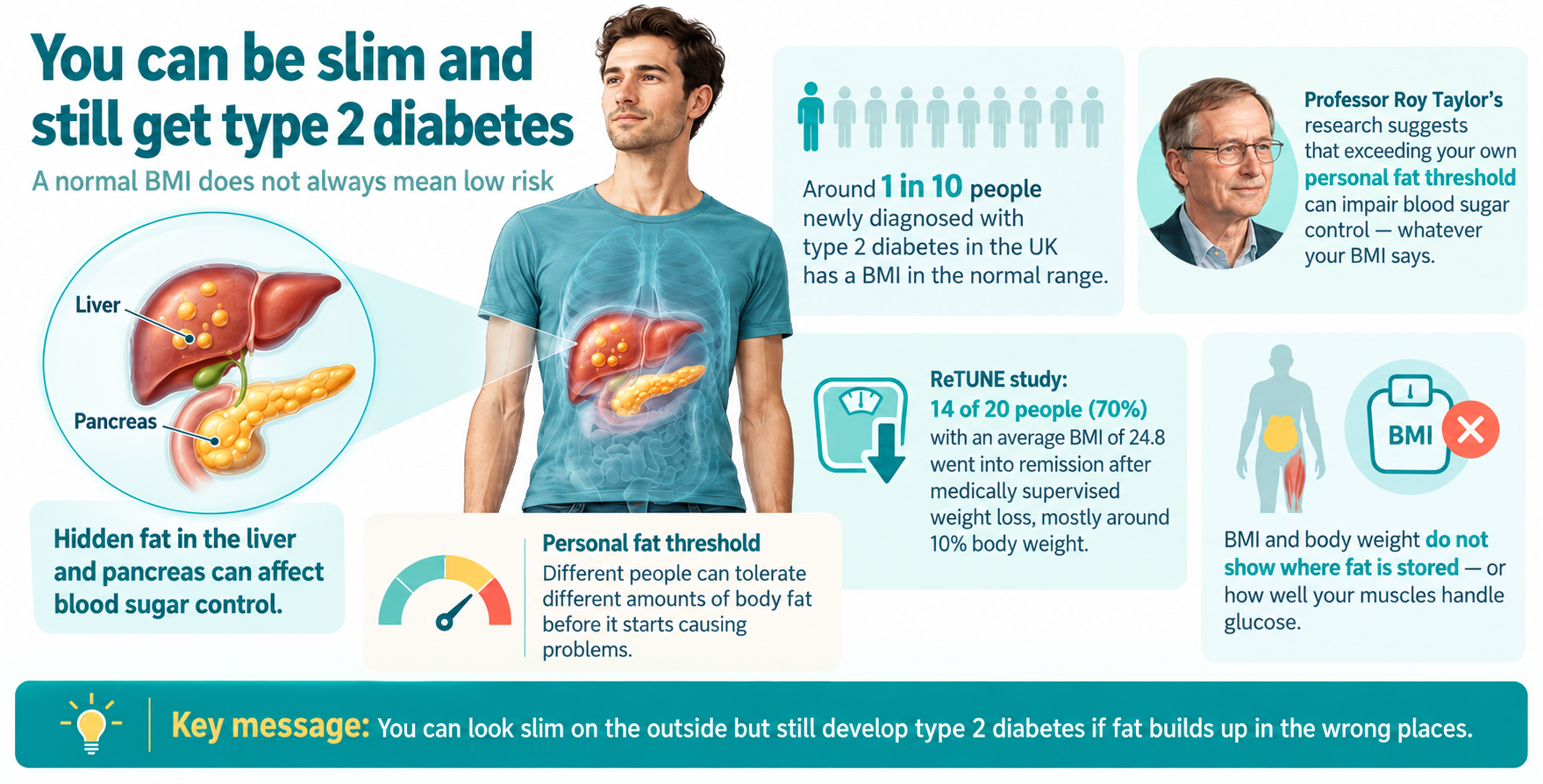
You can be slim and still get type 2 diabetes
This surprises people, and it shouldn't. Around 1 in 10 people newly diagnosed with type 2 diabetes in the UK has a BMI in the "normal" range.
The best explanation we have comes from Professor Roy Taylor's work at Newcastle University. His "personal fat threshold" idea is that each of us can tolerate a different amount of body fat before it starts spilling into places it shouldn't be, particularly the liver and pancreas. Exceed your own threshold and blood sugar control starts to fail, whatever your BMI says.
His ReTUNE study tested this in 20 people with type 2 diabetes and an average BMI of 24.8. Under medical supervision, they lost weight in stages on a low-calorie diet. Fourteen of the twenty, 70%, went into remission, mostly after losing around 10% of their body weight. That's a small study, but the message is clear: a normal BMI doesn't mean your internal fat is normal.
So weight loss isn't the problem here. For many people, losing fat from the liver and pancreas is the single most powerful thing they can do. Genetics, age, family history and ethnicity all play a part too.
What weight and BMI can't tell you is how well your muscles are handling glucose. That's the other half of the story, and it's the piece that most diet-led plans completely ignore. I've seen this first hand, as I have family members with type 2 diabetes. One is a tall, skinny guy, who you'd look at and be shocked to think has diabetes.
What happens to sugar after a meal
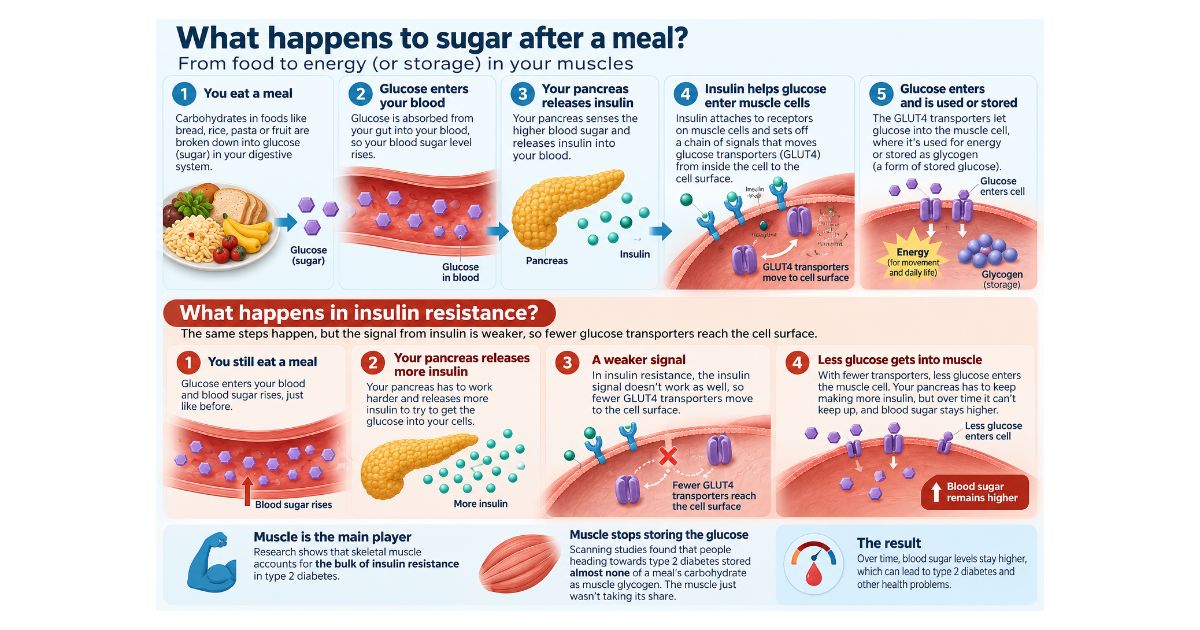
After you eat, glucose enters your blood and your pancreas releases insulin. Insulin attaches to receptors on your muscle cells and sets off a chain of signals that moves glucose transporters, called GLUT4, from inside the cell to its surface. Those transporters let glucose in, where it's either used or stored as glycogen.
In insulin resistance, that signal gets weaker. The same amount of insulin moves fewer transporters, less glucose gets into muscle, and your pancreas has to work harder to compensate. Eventually it can't keep up, and blood sugar rises.
Here's the bit worth sitting with: research has found that skeletal muscle accounts for the bulk of insulin resistance in type 2 diabetes. Taylor's earlier scanning work also showed that people heading towards type 2 diabetes stored almost none of a meal's carbohydrate as muscle glycogen. The muscle just wasn't taking its share.
The back door: why working muscle helps even when insulin doesn't
Muscle has a second route for getting glucose in that doesn't rely on insulin.
When a muscle contracts, it triggers its own signals that move GLUT4 to the surface. This is why exercise can lower blood sugar in someone whose insulin response is poor. The insulin route is struggling, so you use the other door.
The effect doesn't stop when the session does. Frimley Health's patient guidance notes that exercise improves insulin sensitivity for up to 24 hours afterwards. Train regularly and those short-term effects build into lasting change. In one Danish study, people with type 2 diabetes strength-trained one leg for six weeks while the other leg did nothing. The trained leg took up more glucose in response to insulin, contained more GLUT4 and showed better insulin signalling. Same person, same blood, same diet. The only difference was the training. Even a few bodyweight squats throughout the day can make a difference.
You don't need bigger muscles to get the benefit
This is where most "lift weights to burn sugar" advice goes wrong.
Building muscle and improving how muscle works are related, but they're not the same thing. A 2022 meta-analysis of 20 randomised trials, covering 1,172 people with type 2 diabetes, found resistance training lowered HbA1c by around 0.39 percentage points compared with controls. That's modest on its own, and it stacks with diet, aerobic exercise and medication.
The more interesting finding was what predicted the size of the improvement: strength gains. Programmes that made people meaningfully stronger produced larger falls in HbA1c than those with small strength gains.
That matters for two reasons. First, you don't need to look different to benefit. Plenty of the improvement happens in how your muscle handles glucose, before there's much visible change. Second, the training has to be hard enough to actually make you stronger. Going through the motions with a light dumbbell isn't the same stimulus. I see this constantly with people starting strength training later in life: they're working, but nowhere near hard enough to drive any change. Your body will adapt to the demands you place on it, and this is why so many of my PT clients feel the benefits after just a few weeks of training.
Where weight loss fits
If you're carrying excess fat, losing it can be transformational for blood sugar, sometimes to the point of remission. The question is what kind of weight you lose.
Lose a lot of muscle along the way and you've shrunk the very tissue that clears glucose. That's why the 2026 ADA/EASD consensus specifically encourages resistance exercise during weight-loss interventions, including when weight loss comes from the newer medicines, to protect muscle and physical function. I've covered the evidence on losing fat without losing muscle in more detail in Weight Loss After 40: Why Getting Lighter Isn't the Same as Getting Fitter.
Type 2 diabetes in Surrey Heath
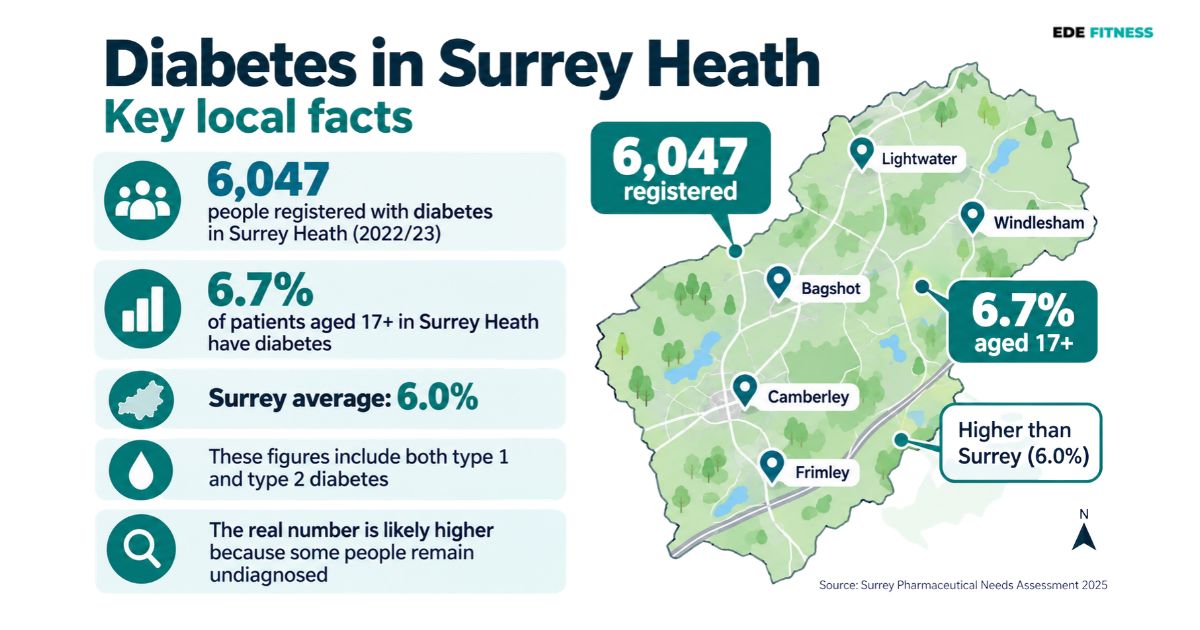
This isn't an abstract national problem. Surrey's 2025 Pharmaceutical Needs Assessment reports 6,047 people registered with diabetes in Surrey Heath in 2022/23. That's 6.7% of patients aged 17 and over, higher than Surrey as a whole at 6.0%.
Those figures include type 1 and type 2, and they leave out people who haven't been diagnosed yet. The real number of people in Lightwater, Bagshot, Windlesham, Frimley and Camberley living with poor blood sugar control is likely higher. They just don't know it yet as it can often go undiagnosed for some time.
If you're looking for somewhere gentle to start, Surrey Heath Borough Council runs a free beginner walking group called Finding Your Feet with Frimley NHS and HCRG Care Group, aimed at people with long-term conditions including diabetes. It meets on Monday mornings at Frimley Lodge Park, and you register through the council's community development team. One of my clients just goes walking on his own around Lightwater Country Park, ensuring he hits his 10,000 steps. Walking and strength training aren't in competition. They do different jobs, and you want both.
What this looks like in a normal week
The new consensus groups the movement side of type 2 diabetes care into five S's: standing, stepping, sweating, strengthening and sleeping. In practical terms:
Strength train two or three times a week. Work the major muscle groups with exercises such as squats or leg press, a hinge, a push, a pull and some carrying. Use a load where the last couple of repetitions in each set feel genuinely hard, and add weight or reps as you get stronger. Progression is the point, which is where a coach like me can help. We can track and monitor that progress, ensuring you don't go through the motions.
Get around 150 minutes of moderate aerobic activity. Brisk walking counts if it's actually brisk.
Break up long periods of sitting. A few minutes on your feet each hour helps. Many fitness trackers can be set up to nudge you if you're sitting too long.
Eat enough protein to support the training. I've set out sensible daily targets in How Much Protein Do You Need After 40?.
Protect your sleep. Short sleep makes blood sugar harder to manage. Sleep is essential to hormone regulation and muscle repair and growth. Some people with type 2 diabetes struggle with disrupted or irregular sleep patterns.
Then measure more than your weight. Waist circumference, how much you can lift, and the HbA1c your GP or practice nurse checks will tell you far more.
"Isn't lifting risky with diabetes, at my age?"
A common worry people bring into the gym is that they've left it too late, or that diabetes means they should stick to gentle walking. The research says otherwise. One trial put adults over 55 with type 2 diabetes through 16 weeks of high-intensity strength training. Their muscle quality improved, their muscle fibres grew and their whole-body insulin sensitivity improved.
The genuine risk worth managing is low blood sugar. If you take insulin, or a sulphonylurea such as gliclazide, exercise can push your glucose down during a session and for many hours afterwards. Before you start or change a training routine:
talk to your GP or diabetes team, especially about medication timing;
keep hypo treatment with you when you train;
don't skip or swap medication for exercise.
Strength training supports medical care. It doesn't replace it. My Level 4 nutrition coaching qualification covers type 2 diabetes, but I'm a coach, not your diabetes team, and I work alongside them rather than instead of them.
Getting started
The aim isn't simply to become a smaller version of yourself. It's to lose excess fat where you need to, while keeping, and ideally building, the muscle that does so much of the work of keeping your blood sugar in check.
If you'd like help putting that into practice, training safely around your medication, loading hard enough to make a difference and progressing week by week, I offer a free 30-minute consultation at Lightwater Leisure Centre. No workout, no pressure, just a proper conversation about where you are. You can book a free consultation here, or email me at [email protected].
Rob Ede is a health-first personal trainer and Level 4 nutrition coach at Lightwater Leisure Centre, working with adults over 40 across Lightwater, Bagshot, Windlesham and the wider Surrey Heath area.
Related reading
Weight Loss After 40: Why Getting Lighter Isn't the Same as Getting Fitter: how to lose fat without losing the muscle and fitness you need.
How Much Exercise Do You Actually Need After 50?: a realistic weekly balance of strength and cardio for a busy schedule.
References (for the curious)