Is It Too Late to Start Strength Training at 50?
No. It isn't too late.
Not at 50, not at 60, and the evidence holds up well beyond that. What changes at 50 isn't whether your body can respond to training. It's where you're starting from.
I've coached hundreds of adults over 40. Here's what I've watched happen, again and again, when someone finally decides to start.
Underneath "is it too late" sits a handful of real worries: I'll hurt myself. I've left it too long. I'll feel out of place. I tried before and it didn't stick. There's usually one more sitting underneath all of those, the one people rarely say out loud: what if I try, and it turns out my best years are already behind me.
Here's the reframe I give almost every client over 50: age gives you limitations. It doesn't make you limited. Most people have conflated those two ideas without ever checking whether it's true. It usually isn't.
What happens to your body if you don't train
The cost of doing nothing isn't dramatic, and that's exactly why it's easy to ignore.
From your early 30s, muscle mass declines by roughly 3% to 5% per decade, and that rate speeds up through your 50s and 60s. Strength drops faster than mass does. Sarcopenia, the medical term for this age-related muscle and strength loss, typically becomes clinically significant in your 60s and 70s, and it carries a meaningfully higher risk of fracture from a fall.
Nobody feels this happening day to day. It arrives as a slow erosion: the stairs get a bit harder, the shopping bags get a bit heavier, standing up off a low sofa takes a bit more effort than it used to. None of it registers as a crisis. That's what makes it easy to ignore, right up until it isn't.
What happens when you actually train
This is the part most "never too late" articles skip. They'll tell you it's possible. They rarely tell you what it looks like.
A meta-analysis pooling results across nearly 50 studies of resistance training in older adults found strength increases of 24% to 33% across leg press, chest press, knee extension and lat pull, with higher-intensity training producing the biggest gains. That's a large improvement, not a marginal one: the kind that turns struggling out of a low chair into not thinking about it, and handing someone the heavy shopping bag into just carrying it yourself.
Bone responds too. A 2025 meta-analysis of resistance training in postmenopausal women found significant improvements in bone mineral density at the lumbar spine, femoral neck, hip and trochanter, the sites that matter most for fracture risk later in life. If you're training through or after menopause, that's one of the main reasons to be lifting at all.
This isn't one hopeful study. It's the consistent pattern across decades of research: the body adapts to demand, regardless of age. Use it or lose it isn't a slogan here; it's the actual biology. The Specific Adaptation to Imposed Demands (SAID) principle applies equally at 25 and 75: the body adapts to the exact physical stress you place on it.
Data on a page rarely gets anyone through the door of a gym for the first time in fifteen years, though. Seeing it happen to someone your own age does.
What I've seen work
A client of mine, approaching sixty, had an employer medical flag several health risks. Nothing catastrophic, but the kind of numbers that get a GP's attention. He trained with me properly for about a year. At his next annual medical, his doctor asked him outright what he'd been doing. He explained he'd been working with a personal trainer. The doctor's reply: keep doing it. Later that year he was away camping with friends his own age. Morning came, and one by one, everyone round the fire reached for a packet of medication with breakfast. He didn't. Nobody said anything about it. Nobody needed to.
Another client came to me because her knees creaked walking upstairs. That was the whole complaint at first, an ache she'd folded into daily life without really clocking it as a problem. We worked through proper strength and conditioning. These days she plays padel competitively, and when she talks about her knees now, it's to tell me about running her opponents round the court, not to complain about them.
A third client, over sixty, started on roughly 45kg of machine assistance just to get through a single pull-up. Nine months of consistent, progressive training later he was doing full bodyweight pull-ups, then weighted dips holding a 10kg plate. That's a man in his sixties adding load to a movement plenty of people in their twenties can't do at all. Progressive overload does that, when someone shows up and lets it work.
The fears themselves
I'll hurt myself. This is the fear I hear most, and it's a fair one. Programmes for someone starting later in life should never begin with heavy weights and hope. When someone tells me they have never lifted before, we do not jump straight under a barbell. We start with a proper movement assessment: how you naturally move, where your mobility is good and where it's restricted, what causes pain and under what conditions. Only once I've seen how your body actually moves do we start choosing exercises, and even then load increases gradually, technique before weight on the bar. One client of mine had osteoarthritis in his shoulder and had previously needed injections to manage it. Gradual, well-programmed training improved his function enough that a planned injection was no longer needed. Strength training didn't cure his osteoarthritis, and nobody should claim it did. It improved his function and reduced his symptoms enough to change his doctor's next decision. If a joint or old injury is already causing problems, get it properly assessed rather than guessed at. I work alongside Physica Health in Bagshot for clients who need that level of input alongside their training.
I'll be sore for days. You might be, especially early on. Everyone is, at any age, the first time a muscle group gets properly worked. DOMS isn't a punishment reserved for people over 50; it's a function of how training gets introduced and progressed.
Everyone will be watching me. They won't. Most people at the gym are absorbed in their own session, not yours. The people who look confident got that way by learning what they're doing, not by being naturally fearless from day one. Confidence follows competence. It arrives faster than most beginners expect, usually within weeks. I had a client who was initially anxious about even attending the gym alone. Her knowledge, technique and confidence built steadily, week on week, until she was training independently without a second thought. Nobody hands you confidence on day one. You build it.
I don't belong there. This one is about the environment, not you. I train out of Lightwater Leisure Centre, and the culture of a gym changes how quickly someone settles in. A gym where all ages train side by side, where members support each other rather than compete for the mirror, where disabled members and complete beginners are welcomed rather than tolerated, is a different experience entirely to a mirrors-and-egos set-up. It's worth choosing carefully.
What happens when you start with me
"Just start" isn't much use without knowing what starting actually looks like, so here's the shape of it.
The first consultation isn't a sales pitch, and it isn't a fitness test either. It's a conversation. I want your history: what you've done before, what's stopped you in the past, any injuries or conditions I need to know about, and what you're actually trying to achieve, not what you think you're supposed to want. Someone who wants to keep playing padel into their seventies needs a different conversation to someone who's had a scare with their bone density.
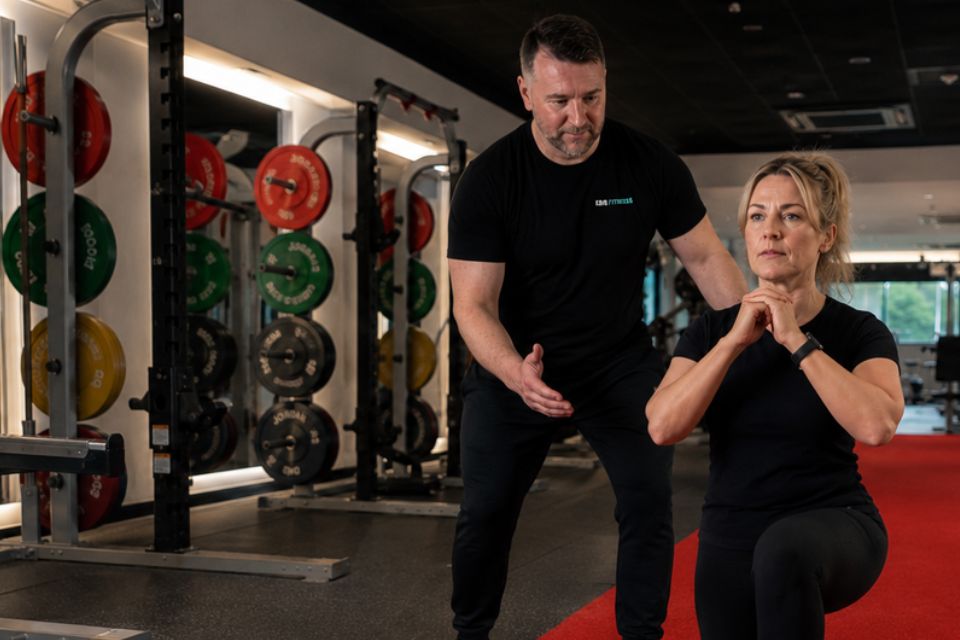
The movement assessment comes next: watching how you move before deciding what to load. I'm looking at natural movement patterns, testing mobility, using light resistance to see how your body responds, checking carefully for anything that causes pain. This is where I find out what you're capable of right now, not what your age or your history suggests. Those two things are often different.
Choosing exercises comes from that assessment, not a generic template. Not everyone needs to squat. Not everyone needs to deadlift. Nobody I coach over 50 needs to become a powerlifter unless that's what they actually want. Every exercise I programme answers a question: what is this trying to achieve for this person? Someone training for padel trains differently to someone training for stronger bones, and someone chasing better mobility trains differently again to someone who just wants to stop dreading the stairs.
Progression is gradual, and honestly less exciting than people expect at first. Weight increases in small, sensible steps once technique is solid. There's no rush: the SAID principle rewards consistency, not recklessness. This is where those 24% to 33% strength gains actually come from in real life: small, repeated, well-managed increases in demand, not one heroic session.
Soreness gets managed honestly rather than ignored. Early sessions can leave you stiff, and I tell people that upfront so it doesn't catch them off guard. It settles as your body adapts, usually within the first few weeks.
Confidence isn't automatic, and I watch for it deliberately. It builds because someone gets better at specific things, week by week, and competence builds confidence underneath them without them really noticing it happening.
Realistic expectations in the first month matter more than people think. You won't be doing bodyweight pull-ups in week two. You'll likely notice you're moving a little more easily, sleeping a bit better, and trusting your body again in small ways: getting up off the floor without thinking about it, carrying the shopping in one trip instead of two. Those small wins are the foundation everything else gets built on.
The point isn't to become someone else
Nobody needs to chase someone else's idea of strong. What you train for is personal: keeping up on the padel court is a different job to protecting your bones, and both are legitimate goals in their own right. The exercise answers to the goal, never the other way round.
I've watched a woman I'd put at around eighty outlast a room of people decades younger in a plank challenge, one by one they dropped out while she held her position. Age didn't decide that outcome. Training did.
The fitness industry gets this wrong constantly. Strength training gets sold through the lens of physiques: huge bench presses, bodybuilding, the kind of content that dominates social media. That's not what most people over 50 need, and chasing it is often exactly what puts people off starting in the first place. Most of my clients want to move well, reduce aches and pains, stay active, enjoy their sport, and remain independent for as long as possible. Strength exists to serve life. Life doesn't exist to serve strength training.
It's not about becoming somebody else's version of strong. It's about becoming a more capable version of yourself.
Why this matters
Most conversations about exercise after 50 focus on slowing decline. The message is always some version of train so you don't fall apart. I think that's the wrong frame, and it's part of why so many people never start. Healthspan only matters if there's something worth being healthy for.
What I actually see, comparing clients who train consistently against those who don't, is fairly stark. The ones who don't train adapt around their decline without noticing it happening: fewer trips upstairs, more reliance on the stair rail, turning down the walking holiday because the knees might not hold up, carrying half the shopping and asking for help with the rest, watching the grandchildren play from the sofa rather than getting down on the floor with them. None of that arrives as one bad day. It arrives as a hundred small concessions, each one reasonable on its own.
The ones who train stay in the game. They book the walking holiday without a second thought. They get down on the floor with the grandchildren and back up again without needing a hand. That's the whole difference, and it comes down to one word: capability. The ability to travel, to play with grandchildren, to carry your own shopping, to enjoy your sport, to stay independent, to keep saying yes to the things that matter to you.
Where to start
Show up before you feel ready. Motivation tends to arrive after the first few sessions, not before them: people wait to feel ready, and readiness rarely turns up until they've actually done the thing a few times.
Get your movement properly assessed rather than copying somebody else's programme off the internet. Progress the load gradually and trust the process, even when it feels slow. Judge success by what you can do, not by what you look like. Stop comparing today's body to the one you had twenty years ago; that comparison was never fair, and it's not the question that matters. The only questions that matter are: where are we today, where do we want to be, and how are we going to get there.
If you're in or around Lightwater, Bagshot or Windlesham and want an honest, no-pressure look at where you're starting from and what a sensible first few months could look like, get in touch at [email protected].
You're not trying to become twenty-five again. You're trying to become strong enough to keep living the life you want for the next thirty years. That's not too late. It's exactly the right time to start.
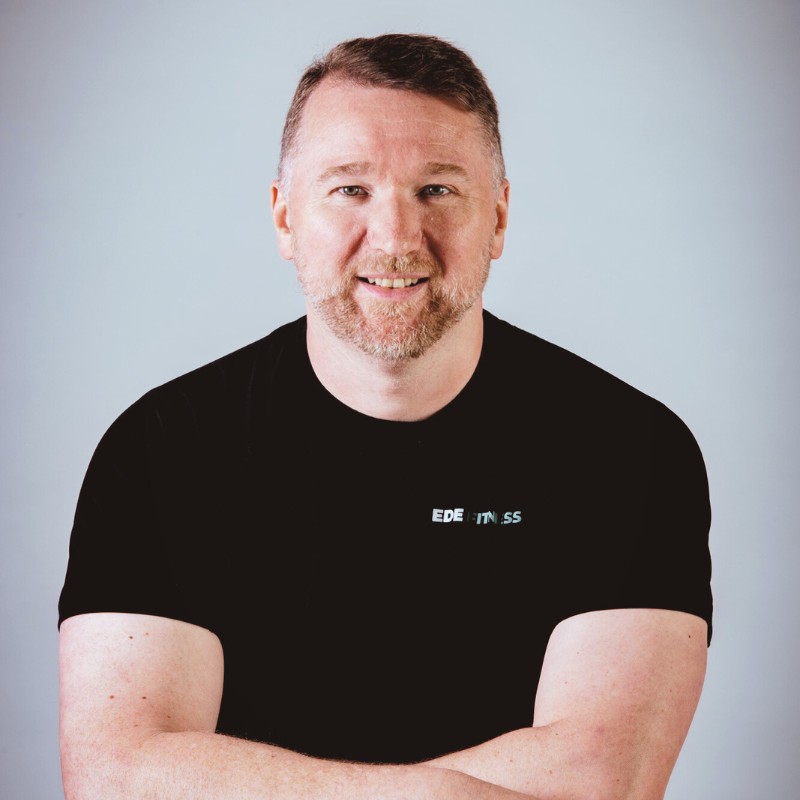
Rob Ede is a health-first personal trainer and Level 4 nutrition coach at Lightwater Leisure Centre, working with busy professionals in their 40s, 50s and 60s who want to stay strong, capable and independent for decades to come.
Medical disclaimer: This article is for general information and education only and is not a substitute for personalised medical advice, diagnosis or treatment. I am a qualified personal trainer and nutrition coach, not a doctor. Always consult an appropriate healthcare professional before making significant changes to your exercise, nutrition or medication, particularly if you have a medical condition, are pregnant, or take prescription medication.
Related reading
How Much Exercise Do You Actually Need After 50?: once you've decided to start, this is the practical next question, how much time it actually takes.
Why You're Getting Weaker After 50, and Why It's Not Inevitable: the deeper science on why strength fades faster than muscle size, and what reverses it.
References (for the curious)
Harvard Health, "Preserve your muscle mass" — age-related muscle loss rates and fracture risk
ScienceDirect, "Resistance exercise for muscular strength in older adults: A meta-analysis" — strength gain percentages across resistance exercises
Journal of Orthopaedic Surgery and Research, "Optimal resistance training parameters for improving bone mineral density in postmenopausal women" — 2025 meta-analysis on resistance training and bone mineral density
Copyright © 2026 Rob Ede. You may quote brief excerpts from this article provided you include appropriate attribution and a link to the original. Please do not reproduce or republish the article in full without written permission.