Beyond Weight Loss: Why We Train, and the Pursuit of a Life Well Lived
Most people who walk into a gym in their 40s or 50s can tell you exactly why they're there, and if I'm honest, the reason is very often somebody else's. The GP mentioned their weight, a partner has been nudging them for a while, or a blood test came back with a number that nobody liked the look of. Those are all perfectly good reasons to start, but in my experience they're rarely the reasons people keep going, and that gap between starting and continuing is really what this article is about.
Long before anyone had heard of a fitness tracker, Aristotle argued that the point of a human life is eudaimonia, which is usually translated as flourishing, or living well, rather than simply feeling happy from one day to the next. Much later, Ayn Rand made a related case that your own life is your highest value and that reason, not wishful thinking, is how you look after it. You don't need to sign up to either of them wholesale to find a few ideas worth borrowing. Reality is what it is regardless of what we'd like it to be, your own life and values are the proper context for your choices, and flourishing comes from purposeful action rather than good intentions. That's quite a useful set of principles to bring into a gym, as it happens.
Whose goal are you actually pursuing?
Say your GP tells you to lose ten kilos, or you've been told you're at increased risk of Type 2 diabetes. That advice is valuable, and I'd never suggest ignoring it, but there's a real difference between being told you should change and recognising for yourself why the change is in your own interests. The first tends to produce a few weeks of dutiful effort that fades once the appointment is forgotten, while the second tends to stick.
A doctor can help you understand the risks, and a partner can tell you they're worried, but deciding what you value and what you're prepared to do about it remains your responsibility. I don't mean that harshly, by the way. It's actually quite freeing, because it means the goal belongs to you and you get to decide what it's for.
Personal training is something I do with you, not to you
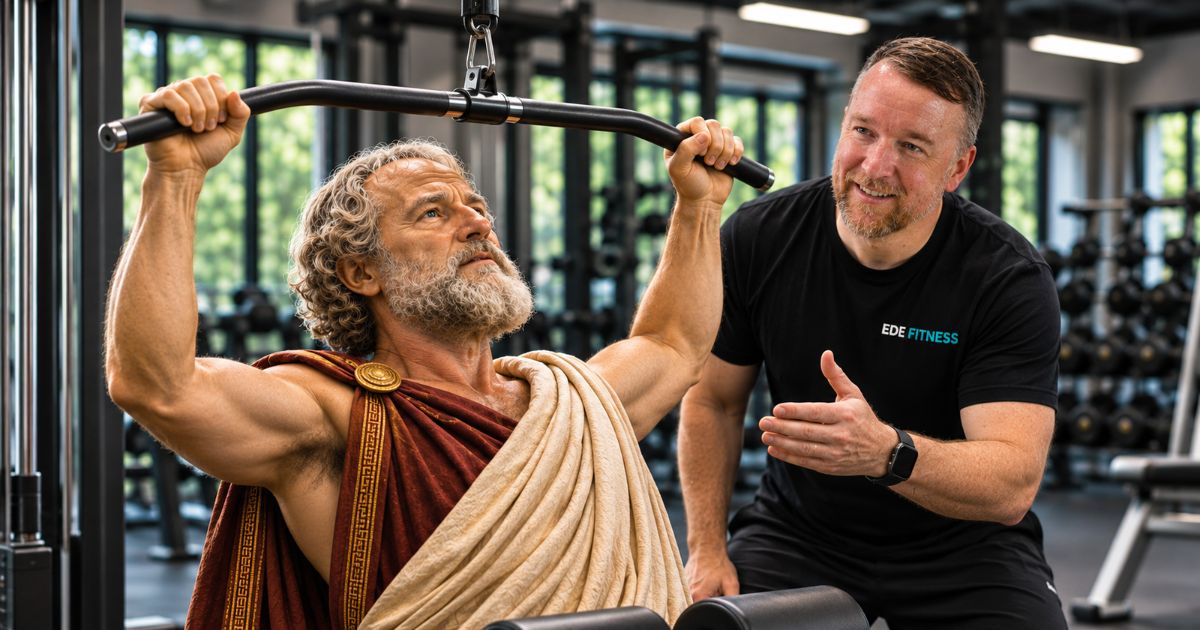
A lot of people arrive expecting something a bit like taking a car to a garage, where they hand over the problem and someone else fixes it. That isn't how good coaching works, and honestly it isn't how I'd want to work either. I'm not a mechanic repairing a broken machine, I'm a coach working alongside another thinking, choosing adult, and the relationship only works if we're both clear about who's responsible for what.
My side of it is to give you evidence-based guidance, a programme built around you, honest feedback, education and support when things get difficult. Your side is to make the decisions, take part honestly, put the effort in and own what you do between sessions. Then there's the shared part, which is reviewing how things are going, spotting the obstacles and changing the approach when it isn't working.
That shared part matters more than people expect. If a food diary leaves out the evening glass or three of wine, or training happens once every ten days instead of three times a week, no amount of clever programming will make up for it, and it's not a moral failing either. I'm not interested in telling anyone off. The point of accountability is simply to get an accurate picture of what's going on, because you can't make good decisions from a picture that isn't true.
Accepting reality is where change starts
Progress begins with an honest look at where you are today, which means your health, what your body can currently do, how much time you've genuinely got, your habits, your resources and your limitations. It's not always a comfortable exercise, but it's the only sensible starting point.
The distinction I'd really want you to hold onto is that accepting reality isn't the same as accepting that nothing can change. Plenty of people I see are living with arthritis, carrying more weight than they'd like, managing diabetes or dealing with stiff hips and a back that's been grumbling for years. Those are circumstances to understand and work with, not reasons to give up on goals that matter to you. A knee that won't tolerate deep squats yet still has plenty it can do, and our job is to find that and build from it.
It's also worth separating responsibility from blame. Owning your choices doesn't mean pretending every health outcome is within your control, because some things simply aren't, whether that's genetics, illness or the plain fact of getting older. What you can own is how you respond, and that's where the useful work happens.
From outside pressure to your own reasons
There's a well-researched framework in psychology called self-determination theory, which suggests we stick with things best when three basic needs are being met. The first is autonomy, choosing to improve your health because it matters to you. The second is competence, the sense of getting better at something, whether that's lifting more, moving more freely or simply feeling more confident in a gym. The third is relatedness, feeling supported and connected to other people along the way.
This isn't just a nice theory. A large systematic review of exercise studies found consistent support for the link between more self-chosen forms of motivation and actually exercising, with personally valued reasons predicting getting started and genuine enjoyment predicting long-term adherence. A later meta-analysis of interventions built on the theory found they improved health behaviour too, though it's fair to say the effects were modest and varied quite a bit, so it's a helpful lens rather than a magic switch.
What I find most useful is the idea that motivation can grow. Plenty of people start because someone else nudged them, and over time that outside push turns into a reason of their own. It's also worth knowing that you don't have to love exercise to value it. Some of my most consistent clients would happily tell you they don't particularly enjoy the gym, but they've decided it's worth doing because of what it gives them, and that's every bit as solid a foundation.
What does success actually mean?
There's a habit in fitness of defining success by the scales, a dress size or some arbitrary performance standard, and I'd be a bit sceptical of anyone who tells you that's the only scoreboard that counts. For one person, success is finishing a 5K. For someone else, it's getting up the stairs without stopping halfway, going back to tennis after a decade off, or being able to get down on the floor with the grandchildren and back up again without a second thought. For quite a few people I work with, it's simply staying independent and capable well into their eighties.
That's where the philosophy comes back in. The purpose of training isn't to satisfy an external standard, it's to build capabilities that serve the life you actually want to live. Weight loss can be part of that, and often is, but it's a means, not the ends.
Turning purpose into practice
Knowing why something matters to you is the beginning, though, not the whole job. Lasting change also needs a sensible plan, training that's appropriate for your body and your schedule, realistic expectations, habits that fit into a real working week, and regular check-ins to see whether it's all working.
Habits in particular take longer to form than most people assume. One well-known study found it took a median of around 66 days for a new daily behaviour to become automatic, with a very wide range between people, and that missing the odd day didn't derail the process. That's quite reassuring if you've ever written off a whole month because of one bad week.
Which brings me to setbacks. A missed fortnight, a sore shoulder or a stalled lift isn't evidence that you've failed, it's information. Maybe the plan asked too much of a busy month, or the programme needed adjusting, or something else in life took priority for a while. We look at what happened, change what needs changing and carry on, and that's really the practical value of having a coach: helping turn good intentions into actions you can actually keep doing.
So, what would become possible?
We don't train just to get better at exercising. We train because more strength, stamina and mobility give us more room to go after the things we value, whether that's work, travel, sport, family or simply getting through a busy week without feeling wrecked by Thursday.
So here's the question I'd leave you with. If your health, strength and fitness improved over the next twelve months, what would become possible in your life that isn't possible today?
If you've got an answer to that, or even half an answer, I'd be glad to talk it through with you. You can book a free consultation and we'll look at where you are now and what you'd like training to do for you, or if you'd rather start with a quick message, just email me at [email protected].
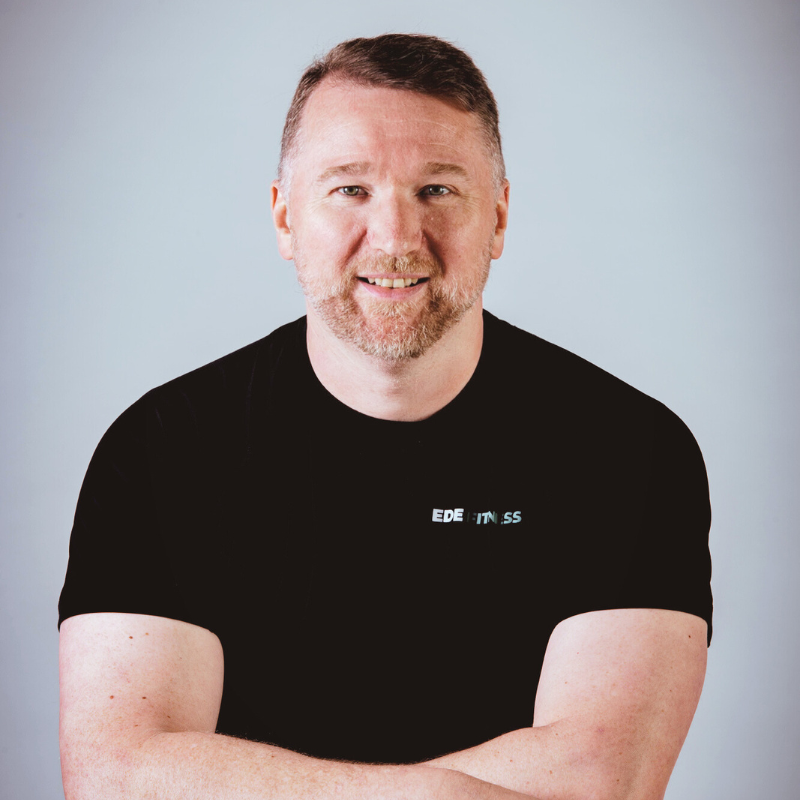
Rob Ede is a health-first personal trainer and Level 4 nutrition coach at Lightwater Leisure Centre.
References (for the curious)
Teixeira PJ, Carraça EV, Markland D, Silva MN, Ryan RM. Exercise, physical activity, and self-determination theory: a systematic review. International Journal of Behavioral Nutrition and Physical Activity, 2012; 9:78.
Ntoumanis N, Ng JYY, Prestwich A, et al. A meta-analysis of self-determination theory-informed intervention studies in the health domain: effects on motivation, health behavior, physical, and psychological health. Health Psychology Review, 2021; 15(2):214-244.
Lally P, van Jaarsveld CHM, Potts HWW, Wardle J. How are habits formed: modelling habit formation in the real world. European Journal of Social Psychology, 2010; 40(6):998-1009.