Creatine After 40: The Evidence | PrimeFit Lightwater
Most of what gets written about creatine is aimed at 22 year-olds chasing a bigger bench press. That's a shame, because the people who stand to gain the most from it are the ones least likely to be reading about it: professionals in their forties, fifties and sixties who are trying to hold onto their strength, their sharpness and their independence while juggling everything else.
So let's skip the gym-bro framing. If you're commuting out of Lightwater or Bagshot into London three days a week, running a business, and squeezing in two or three gym sessions if you're lucky, you don't need hype. You need to know what works, what's safe, and what gives you the most return for the least faff. Creatine ticks all three boxes, and the evidence behind it is about as solid as it gets in nutrition.
Here's the honest version.

What creatine actually is
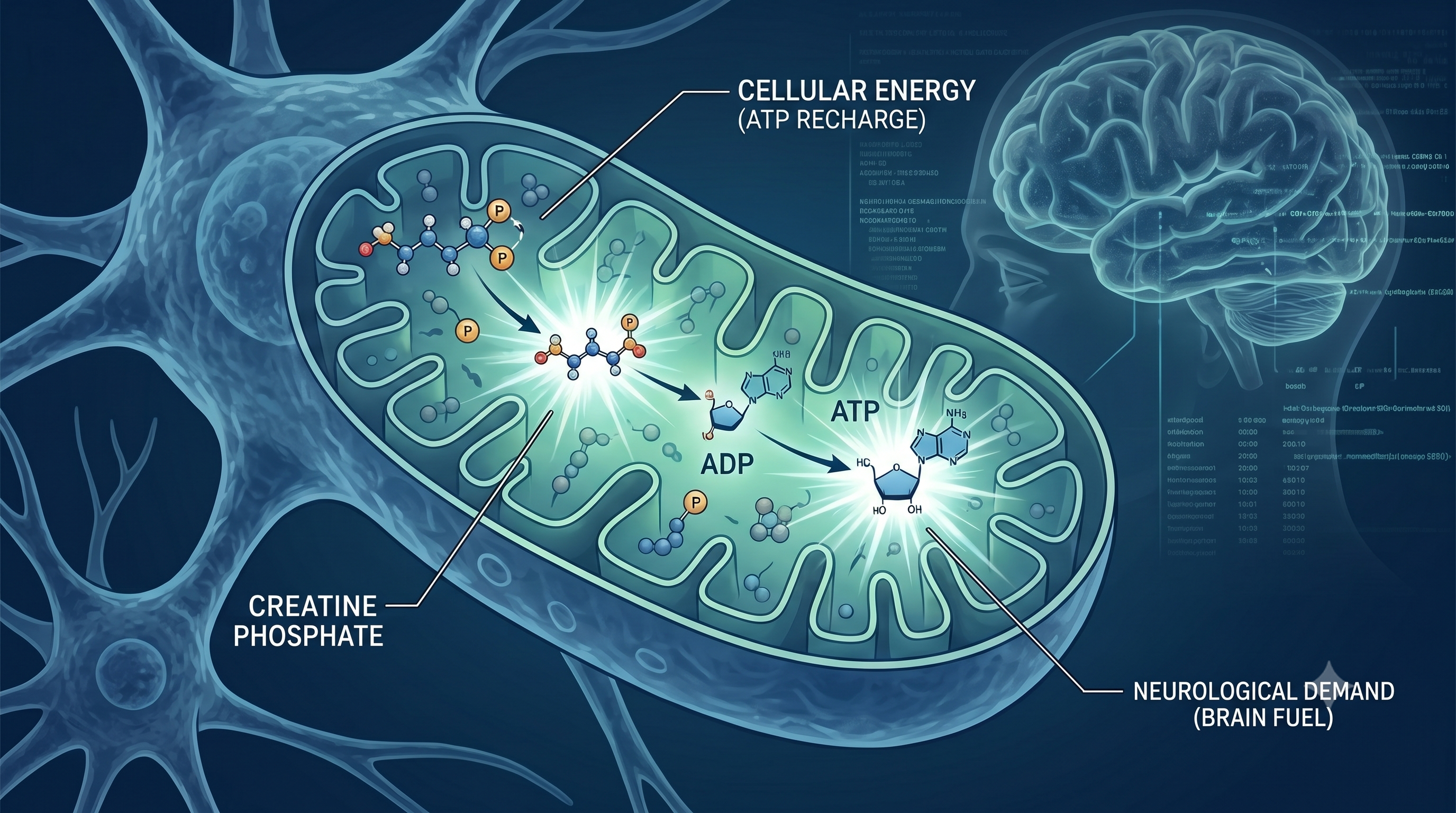
Creatine isn't a steroid, a hormone, or a stimulant. It's a compound your body already makes and stores in your muscles and brain, where it acts as a rapid-recharge system for cellular energy. You get some from red meat and fish; you make a bit yourself. Supplementing simply tops the tank up to where your physiology can actually use it. That's it. No magic, no marketing — just a well-understood molecule that does a specific job well.
It's also, by some distance, the most researched supplement on the shelf. Decades of trials, thousands of participants. When something has been studied this hard and keeps coming back clean, that tells you something.
The strength angle: you start losing muscle at 50, whether you like it or not
This is the part nobody enjoys hearing. From around age 50, you lose roughly 1–2% of your muscle mass and up to 1.5–5% of your strength every single year if you do nothing about it. That's not a vanity problem. Lean muscle is what keeps you metabolically healthy, protects your joints, and — bluntly — keeps you off the floor. Falls and frailty in later life trace straight back to muscle you didn't defend.
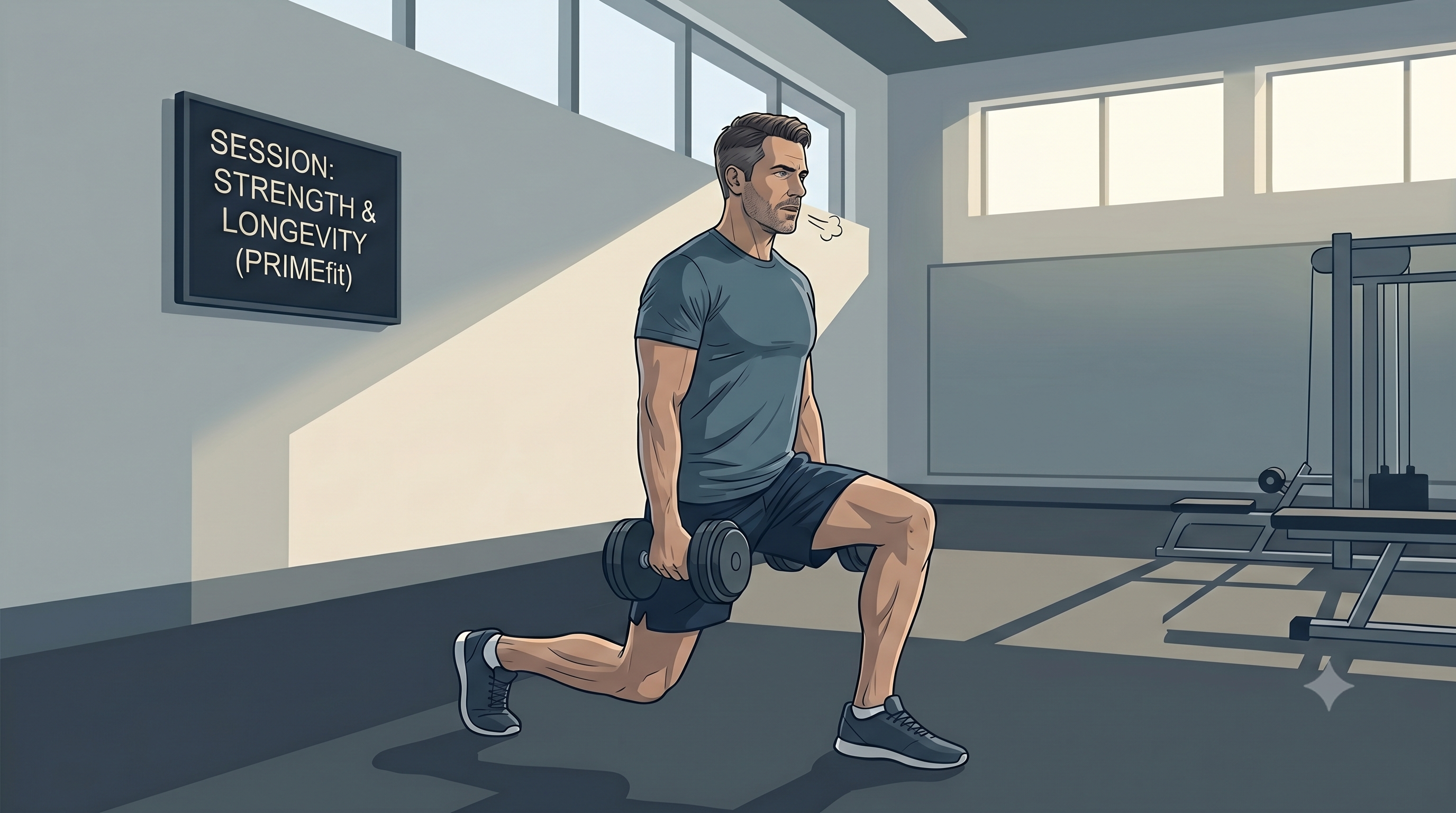
Resistance training is the non-negotiable first move here. But creatine meaningfully sharpens the result. Pooled across multiple meta-analyses, older adults who lifted weights and took creatine gained roughly 1.2–1.3 kg more lean tissue than those who lifted and took a placebo, alongside better strength gains. Same training, better outcome, because creatine helps your muscle cells recover and adapt between sessions.
The detail that matters for you: in these studies, people were training just two to three times a week — exactly the realistic schedule of a busy professional. This isn't a benefit reserved for people living in the gym. It's a benefit built for people who aren't.
That's the whole logic of the PrimeFit approach at Lightwater Leisure Centre — getting the maximum physical return out of two or three well-structured sessions, rather than asking you to find hours you haven't got. Creatine is one of the cheapest levers you can pull to make those sessions count for more.
The cognitive angle: fuel for a tired brain
Your brain is an energy hog, and creatine isn't just stored in muscle — it's stored in brain tissue too, doing the same rapid-energy job. This is the area generating the most interest right now, and for a sleep-deprived, decision-fatigued audience it's worth understanding properly.
A 2024 study from the Jülich research centre in Germany made headlines: a single dose of creatine measurably improved memory, attention and processing speed in people kept awake overnight, with effects showing up within about three and a half hours.
Now, the honest caveat — because your garbage detector is presumably calibrated. That study used a one-off megadose of around 0.35 g per kilo of bodyweight, roughly 25 grams for an average bloke, about five times a normal daily dose. The researchers explicitly warned people not to do that at home, because a single hit that size is a genuine load on your kidneys. So don't read the headline and start downing scoops.
What the headline does tell us is real and useful: your brain can use creatine, and the payoff is biggest when your brain is under stress — underslept, mentally drained, grinding through a hard week. A steady 3–5 g daily keeps your brain's creatine stores topped up so that capacity is there when you need it. Think of it as quiet cognitive insurance for the weeks when sleep goes out the window. Not a nootropic miracle — just a sensible buffer.
Let's kill the two myths that put people off
For an audience that reads the evidence, these need dealing with head-on, because they're both wrong.
"It wrecks your kidneys." This is the big one, and it's a misunderstanding of a lab number. Creatine does nudge up serum creatinine on a blood test — but that's because creatine naturally breaks down into creatinine, so you're simply producing more of the byproduct. It is not a sign your kidneys are filtering worse. When researchers measure actual kidney function properly (GFR, or the more accurate cystatin C marker), it stays flat. A 2025 meta-analysis in BMC Nephrology confirmed it: modest rise in the marker, no effect on real filtration.
The whole scare traces back to a single 1998 case report of one man who already had a diagnosed kidney disease. One case, thirty years of nervousness. The science has long since moved on. The genuine caveat: if you have existing kidney disease, uncontrolled high blood pressure, or diabetes-related kidney issues, have a word with your GP first. For a healthy adult, the safety record is excellent.
"It just makes you hold water and look puffy." Not the way people imagine. Creatine pulls a little water into your muscle cells — that's part of how it works — not under your skin. The early scale bump of around half a kilo to a kilo and a half is intracellular water and, soon enough, actual muscle. It's not the bloated, soft look people fear. If anything, it's the opposite.
The protocol: about as simple as it gets
No need to overthink this.
Form: Creatine monohydrate. Ignore the expensive "advanced" versions — monohydrate is the most studied, the most effective, and the cheapest. For peace of mind on purity, pick a product carrying an Informed Sport or NSF Certified for Sport badge.
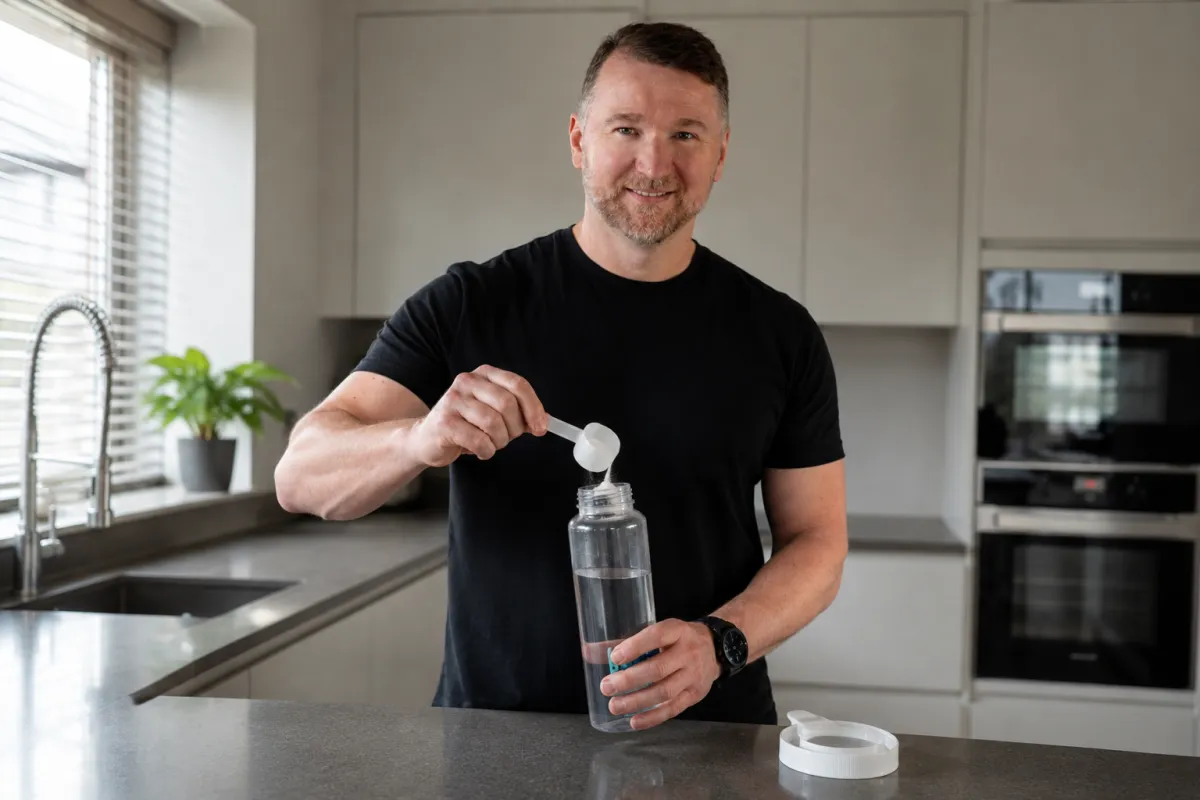
Dose: 3–5 g a day, every day. Pick a time you'll remember — most people just add it to a morning drink.
Loading? Optional. The old "20 g a day for a week" loading phase only speeds up saturation by a couple of weeks; it doesn't raise the ceiling. If you're not in a rush, skip it and go straight to 3–5 g. Your stores fill up either way.
Hydration: Drink normally. There's no need to force litres, but since creatine shifts water into your cells, don't let yourself get dehydrated.
Consistency beats everything. A daily 3–5 g habit you actually keep is worth far more than a perfect protocol you abandon by February.
A note on the bigger structural picture
Creatine supports strength training, but it doesn't replace good movement mechanics, and if you're carrying a niggle from years at a desk, that's worth sorting before you load it heavily. For structural and joint issues, it pays to have a good physiotherapist in your corner. I work with the team at Physica Health in Bagshot — Masters-qualified physios who handle everything from everyday aches and desk-bound backs through to proper sports rehab. Get the niggle assessed, then build your strength work on top of a body that's actually ready for it.
Pair sensible joint care with progressive resistance training and a topped-up creatine store, and you've got the unglamorous, evidence-led basics of staying strong and capable into your 60s and beyond. No gimmicks. Just getting the fundamentals sorted.
Where this fits for you
Creatine isn't a strategy on its own — it's a force multiplier on top of one. The strategy is structured, progressive strength work that fits a real schedule, built around where you actually are right now.
That's exactly what we do with PrimeFit at Lightwater Leisure Centre. If you want to map out a complete strength-and-longevity plan — and work out whether you're getting full value from the two or three sessions you've got time for — book a free intro session. We'll discuss where you're starting from, where the easy wins are, and build a plan around your week rather than someone else's.
Find out more about the programme and get in touch at edefitness.com, or email me directly at [email protected]
Get the basics right, and the years look after themselves.
Rob Ede is a Level 4 nutrition coach and personal trainer running his PrimeFit at Lightwater Leisure Centre, working with busy professionals across Lightwater, Bagshot, Windlesham and the wider Surrey Heath area.
References (for the curious)
Forbes et al. Meta-Analysis Examining the Importance of Creatine Ingestion Strategies on Lean Tissue Mass and Strength in Older Adults. Nutrients, 2021. — https://www.mdpi.com/2072-6643/13/6/1912
The impact of creatine supplementation associated with resistance training on muscular strength and lean tissue mass in the aged: a systematic review and meta-analysis. European Review of Aging and Physical Activity, 2025. — https://link.springer.com/article/10.1186/s11556-025-00392-9
Gordji-Nejad et al. Single dose creatine improves cognitive performance and induces changes in cerebral high energy phosphates during sleep deprivation. Scientific Reports, 2024. — https://www.nature.com/articles/s41598-024-54249-9
Effect of creatine supplementation on kidney function: a systematic review and meta-analysis. BMC Nephrology, 2025. — https://link.springer.com/article/10.1186/s12882-025-04558-6
Medical Disclaimer
The information provided on this website and in any associated content is for general educational and informational purposes only. It reflects my work as a qualified nutrition coach and personal trainer, not as a medical professional, and it is not intended to be a substitute for professional medical advice, diagnosis, or treatment.
Always seek the advice of your GP or another qualified healthcare provider before starting any new supplement (including creatine), exercise programme, or dietary change — particularly if you have an existing health condition, are taking medication, are pregnant or breastfeeding, or have any concerns about your health. Never disregard professional medical advice, or delay seeking it, because of something you have read here.
Individual results vary, and nothing on this site guarantees any specific outcome. Any action you take based on this information is at your own discretion and risk, and I accept no liability for any loss or injury arising from its use.
If you think you may have a medical emergency, contact your GP or call 999 immediately.